Post Disclaimer
The information contained in this post is for general information purposes only. The information is provided by Agar Agar vs Gelatin: The Complete Home Cook Guide and while we endeavour to keep the information up to date and correct, we make no representations or warranties of any kind, express or implied, about the completeness, accuracy, reliability, suitability or availability with respect to the website or the information, products, services, or related graphics contained on the post for any purpose.
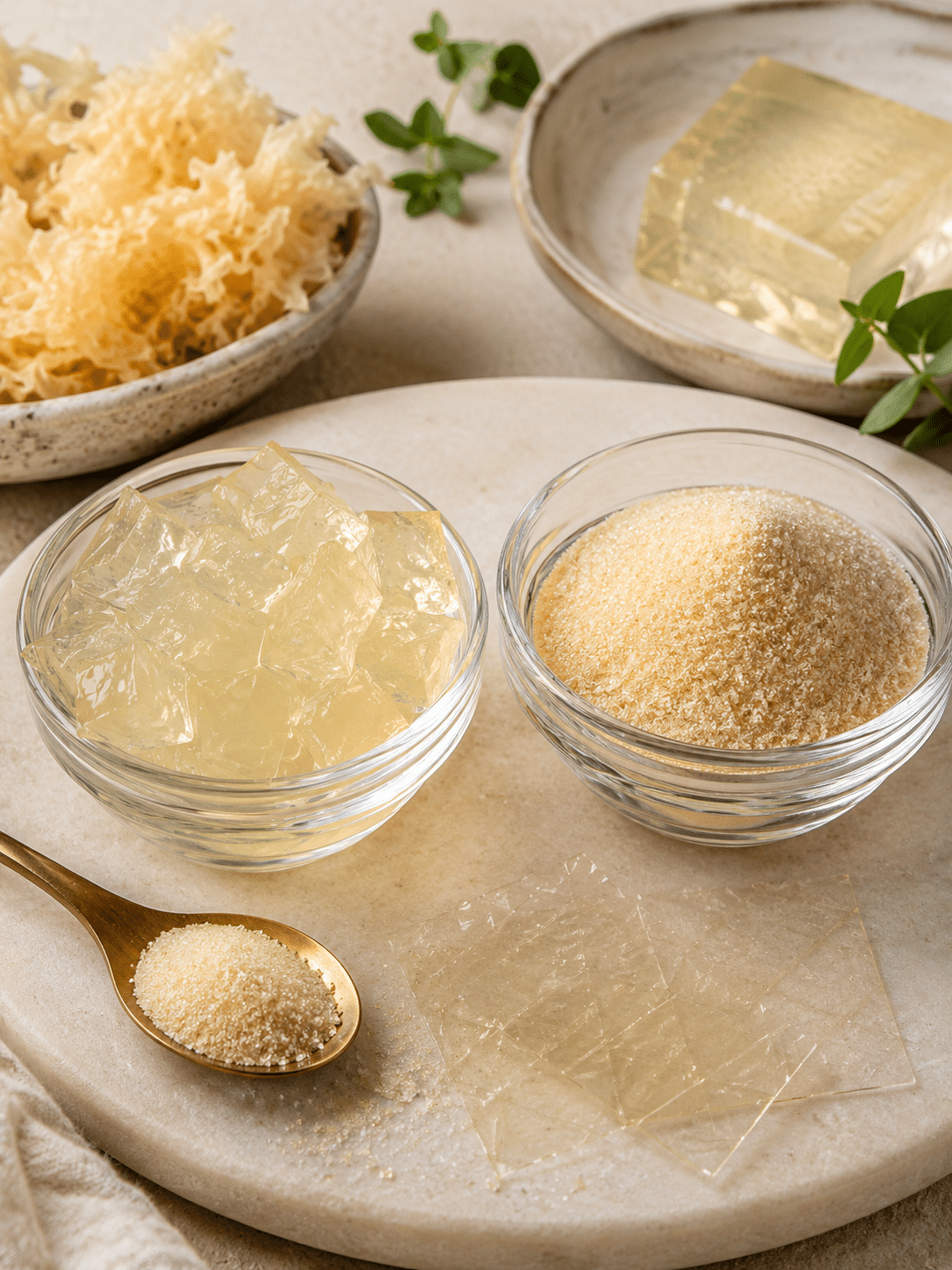
Agar Agar vs Gelatin comes down to source, texture, heat behavior, and dietary needs. Agar agar sets firmer, comes from seaweed, and works for vegan or halal-friendly cooking. Gelatin melts softer, comes from animal collagen, and gives desserts that classic bounce.
The first time I tested Agar Agar vs Gelatin in my kitchen, I thought I could swap one for the other and call it done. I had a little pot of mango juice warming on the stove, a small packet of gelatin on one side, and Agar Agar powder on the other. The kitchen smelled bright and fruity, and I had visions of clean little cubes that would slice like jewels. Then I made the mistake most home cooks make. I used them like they were the same thing.
They are not the same thing at all.
Agar Agar vs Gelatin is one of those kitchen comparisons that sounds simple until your dessert turns rubbery, watery, too stiff, or too soft. After making jelly cups, fruit gummies, whipped fillings, marshmallow tests, and chilled puddings dozens of times, I’ve learned that the better choice depends on what you’re making. Agar agar sets fast and firm. Gelatin sets soft and springy. Agar agar can sit out in a warm room better. Gelatin melts in your mouth in a way agar usually doesn’t.
In my kitchen, I’ve found that Agar Agar vs Gelatin matters most when people are cooking for mixed diets. Someone may want a vegetarian jelly. Someone else may need halal-friendly ingredients. Another person may want that soft, classic gelatin dessert texture they grew up with. And sometimes you’re simply standing in the baking aisle wondering why Agar Agar powder costs more and whether it’s worth buying.
A reader named Maya once told me, “I finally stopped ruining my coconut jelly when I realized agar has to boil. I had been treating it like gelatin.” That’s the kind of small kitchen detail that changes everything. Another reader, Tom, said his first agar gummies “looked perfect but chewed like pencil erasers,” which made me laugh because I’ve been there too.
Agar Agar vs Gelatin is not about one being good and the other being bad. It’s about using the right gelling ingredient for the job. Agar comes from red algae, and Wikipedia describes agar as a jelly-like substance made from certain red algae. Gelatin comes from animal collagen, which gives it that softer, silky set. Food thickeners and gelling agents also sit within broader U.S. ingredient rules, and the FDA explains how food additives and ingredients are reviewed and regulated before use.
If you enjoy pantry experiments like this, you might also like the way I break down small ingredient choices in my blue salt trick guide, because the same rule applies here: tiny amounts can change the whole recipe. By the end of this guide, Agar Agar vs Gelatin will feel much easier, whether you’re making jelly, gummies, panna cotta, marshmallows, or a chilled fruit dessert for the weekend.
Table of Contents
Key Takeaways
- Agar Agar vs Gelatin is mainly a difference between plant-based firmness and animal-based softness. Agar agar comes from seaweed, while gelatin comes from collagen.
- Agar Agar powder must simmer or boil briefly to activate properly. Gelatin usually needs blooming in cool liquid first, then gentle warming.
- The common agar agar vs gelatin ratio is about 1 teaspoon Agar Agar powder for every 1 tablespoon powdered gelatin, but recipes vary.
- Agar agar sets more firmly and does not melt as easily at room temperature. Gelatin gives a softer, bouncy texture that melts in the mouth.
- Agar agar works well for vegan jelly, firm fruit cubes, and warm-weather desserts. Gelatin works well for mousse, marshmallows, panna cotta, and classic gummies.
- Agar Agar vs Gelatin for gummies depends on the bite you want. Agar makes firmer chews, while gelatin gives a stretchier candy-style chew.
- For halal or vegetarian cooking, agar agar is often the simpler pick, but always check package labels for certification and cross-contact notes.
What Is Agar Agar vs Gelatin in Home Cooking?
What makes agar agar and gelatin different from the start?
Agar Agar vs Gelatin starts with where each ingredient comes from. Agar agar is plant-based and comes from seaweed, usually sold as flakes, bars, strands, or Agar Agar powder. Gelatin comes from animal collagen, most often from beef or pork sources, though fish gelatin also exists. That source difference matters for vegetarian, vegan, halal, kosher, and personal cooking choices. In my kitchen, I treat agar as the firmer, cleaner-cut option and gelatin as the softer, more delicate option.
Agar Agar vs Gelatin also behaves differently with heat. Agar needs a proper simmer to dissolve. If you only warm it gently, it may leave tiny grains or fail to set evenly. Gelatin needs the opposite kind of care. You usually sprinkle gelatin over cool liquid first, let it bloom, then warm it gently until it melts. Boiling gelatin too hard can weaken the set. That’s why one ingredient can’t always step into the other’s shoes without a few changes.
When I compare Agar Agar vs Gelatin for home cooks, I like to think about the final spoonful. Agar agar gives a clean snap and a firm slice. Gelatin gives wobble, bounce, and a silky melt. If you want coconut jelly cubes that hold sharp edges, agar is usually my pick. If you want a creamy panna cotta that trembles on the spoon, gelatin often wins. Neither one is “better” in every recipe. They simply have different personalities.
Why does texture matter so much?
Texture is where Agar Agar vs Gelatin really shows up. A dessert can have the right flavor and still feel wrong if the set doesn’t match the recipe. Agar agar can taste neutral, but it sets with a firmer bite. Use too much and your jelly can feel brittle or rubbery. Gelatin feels softer and more elastic. Use too little and your dessert slumps. Use too much and it can feel chewy in a way that distracts from the flavor.
After making Agar Agar vs Gelatin tests with fruit juice, milk, coconut cream, and tea, I’ve found that clear liquids show the difference fastest. Agar sets into a firm gel even when you cut it into neat cubes. Gelatin turns the same juice into something softer and more jiggly. For layered desserts, agar can be helpful because it sets fast. For creamy desserts, gelatin can feel more graceful because it melts as you eat it.
If you like kitchen comparisons, my baking soda trick has the same kind of “small amount, big result” feeling. A pinch, spoonful, or slight timing change can decide whether a recipe works. Agar Agar vs Gelatin is exactly like that. Once you understand the texture goal, the choice gets easier, and your desserts stop feeling like guesses.
How Do You Use Agar Agar vs Gelatin Without Ruining the Set?
Agar Agar vs Gelatin works best when you treat each ingredient by its own rules. Agar agar needs simmering, sets quickly, and gives a firm finish. Gelatin needs blooming, melts gently, and creates a soft wobble. The safest swap starts with less, then adjusts after testing.
What is the right agar agar vs gelatin ratio?
The agar agar vs gelatin ratio most home cooks start with is 1 teaspoon Agar Agar powder for every 1 tablespoon powdered gelatin. That’s not a perfect rule for every recipe, but it gives you a solid starting point. Agar is much stronger by volume than gelatin, so a direct spoon-for-spoon swap can make dessert far too firm. When testing Agar Agar vs Gelatin, I always write down the liquid amount, the spoon measurement, and how the dessert felt after chilling.
Here’s a simple guide I use in my kitchen:
| Recipe Need | Gelatin Amount | Agar Agar Powder Starting Point | Texture Result |
|---|---|---|---|
| Soft set dessert | 1 tablespoon | 3/4 teaspoon | Gentle but sliceable |
| Firm jelly cubes | 1 tablespoon | 1 teaspoon | Clean cut and sturdy |
| Very firm molded jelly | 1 tablespoon | 1 1/4 teaspoons | Stronger hold |
| Gummies | 1 tablespoon | 1 to 1 1/2 teaspoons | Firm chew, less stretch |
| Creamy pudding-style dessert | 1 tablespoon | 1/2 to 3/4 teaspoon | Softer agar set |
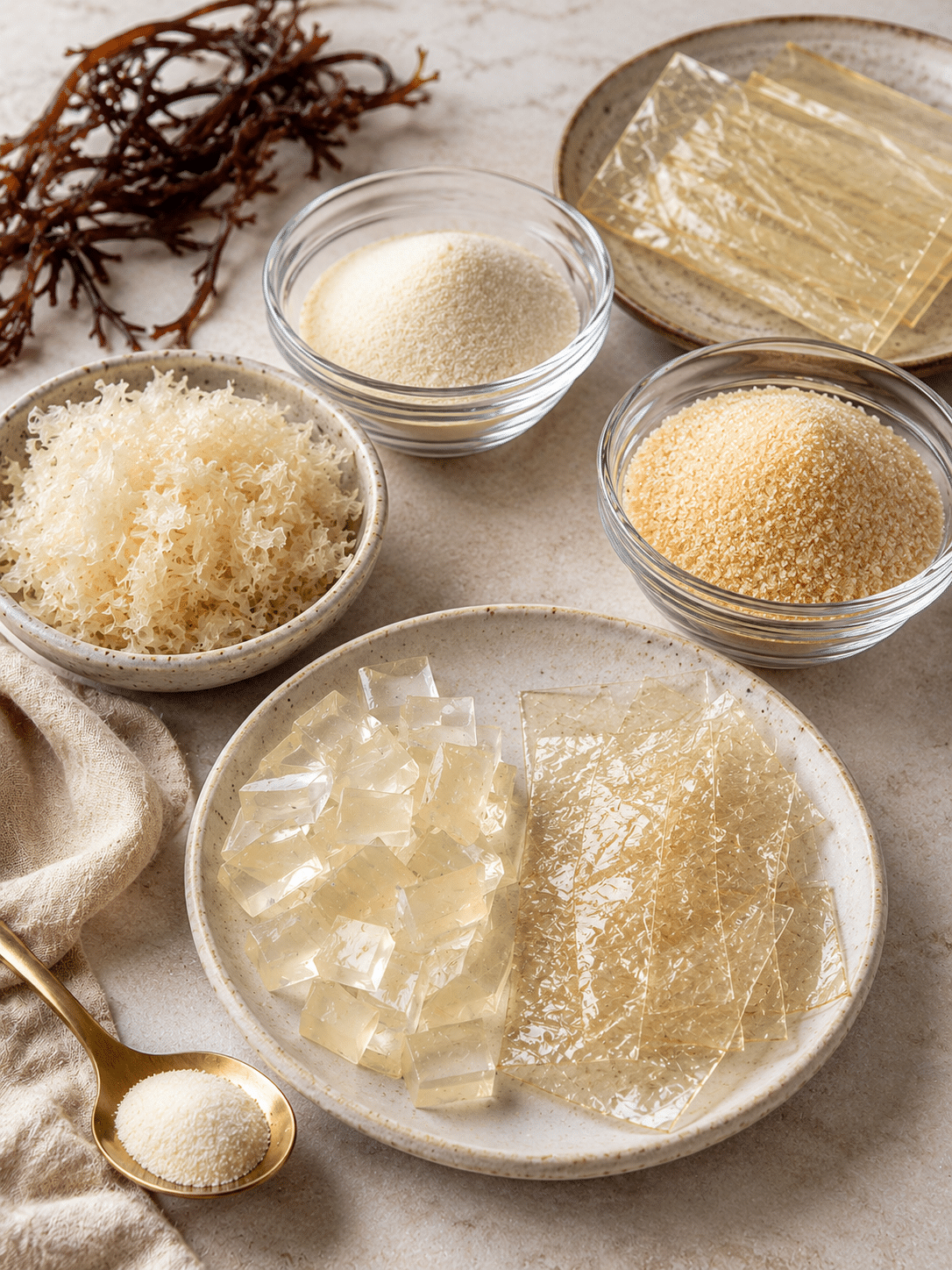
Agar Agar vs Gelatin ratios shift with acid, sugar, dairy, fruit enzymes, and cooking time. Pineapple, kiwi, papaya, and some other fresh fruits can interfere with gelatin because of natural enzymes. Agar handles many fruit recipes better, though very acidic liquids may need slight adjustments. I like to test one small cup before pouring a full tray, especially when using lemon juice, passion fruit, or berry puree.
What steps help each one set correctly?
Agar Agar vs Gelatin success comes down to method. For agar, whisk the powder into the liquid while it is cool or just warm, then bring it to a simmer. Let it bubble gently for about one to two minutes, whisking so it dissolves fully. Then pour it into molds or cups. Agar starts setting as it cools, sometimes before it even reaches the fridge, so have your cups ready.
Gelatin needs a slower start. Sprinkle it over cold water, juice, or milk and let it bloom for five to ten minutes. The granules swell and soften. Then warm the mixture just until the gelatin melts. Do not boil it hard. When comparing Agar Agar vs Gelatin, this is one of the biggest differences: agar wants heat, gelatin wants patience.
For a sweet pantry pairing, I sometimes serve agar fruit cubes with a light honey drizzle, and my Canaan honey trick gives another look at how honey can fit into simple kitchen routines. Keep in mind, though, that honey adds sweetness and moisture, so it can slightly change the firmness of jelly. Agar Agar vs Gelatin both respond to sugar, but agar still tends to set firmer while gelatin stays softer and silkier.
agar agar jelly cubes
Ingredients
Equipment
Method
- Pour the liquid into a small saucepan. Add the agar agar powder and whisk well while the liquid is still cool.
- Place the saucepan over medium heat and bring the mixture to a gentle boil.
- Simmer for 1 to 2 minutes, whisking often, until the agar agar powder fully dissolves.
- Stir in the sweetener until dissolved. Add the lemon juice if using.
- Pour the hot mixture into a shallow dish, silicone mold, or small cups.
- Add fresh fruit pieces if desired, then let the jelly cool at room temperature for 10 minutes.
- Chill for 20 to 30 minutes, or until fully set.
- Slice into cubes and serve cold.
Notes
Which Recipes Work Best With Agar Agar vs Gelatin?
Is agar agar better for jelly, fruit cups, and warm-weather desserts?
Agar Agar vs Gelatin often favors agar when you need a dessert that slices cleanly and holds up longer outside the fridge. Agar sets at a higher temperature than gelatin, so it does not soften as quickly on a warm table. That makes it a great choice for fruit jelly cubes, layered coconut jelly, coffee jelly, tea jelly, and colorful dessert cups for parties. In my kitchen, I reach for Agar Agar powder when I want sharp edges and easy unmolding.
The main thing to remember is that agar can get too firm fast. If your jelly feels stiff, reduce the powder next time. If it weeps or breaks, check whether the agar fully dissolved. Agar Agar vs Gelatin tests can feel fussy at first, but once you find your favorite ratio, it becomes a reliable pantry move. I usually start with 1 teaspoon Agar Agar powder for 2 cups liquid when I want a firm jelly, then adjust depending on sugar, fruit, and acidity.
Agar agar also works beautifully in dairy-free desserts. Coconut milk, almond milk, oat milk, fruit juice, and tea can all set with agar. Gelatin can work in many of these too, but it will not be vegetarian or vegan. That’s why Agar Agar vs Gelatin becomes more than a texture question when you’re serving guests. It’s also about making a dessert more people can enjoy at the same table.
Is gelatin better for creamy desserts and marshmallows?
Agar Agar vs Gelatin often favors gelatin when the dessert needs bounce, stretch, or a melt-in-your-mouth finish. Gelatin is classic for mousse, panna cotta, whipped cheesecake filling, marshmallows, and soft gummy candies. It gives structure without making the dessert feel sharp or brittle. If you’ve ever eaten a spoonful of panna cotta that feels cool, smooth, and barely set, that’s gelatin doing its quiet work.
Agar-agar vs gelatin for marshmallows is a tricky comparison because marshmallows rely on air, sugar syrup, and elastic structure. Gelatin handles that job beautifully because it traps air and gives the marshmallow its familiar bounce. Agar can set a marshmallow-style mixture, but it usually gives a firmer, less stretchy texture. Some vegan marshmallow recipes use agar with other stabilizers, but the result will not be exactly like classic gelatin marshmallows.
When people ask about Agar Agar vs Gelatin for gummies, the same rule applies. Gelatin gives traditional gummies their chew and stretch. Agar gives a firmer bite, more like a jelly candy than a gummy bear. If you’re reading agar agar vs gelatin reddit threads, you’ll often see home cooks say agar gummies turn out “snappy” or “firm.” That matches my tests. Agar can make fun fruit bites, but gelatin gives that candy-shop chew.
If you’re comparing gelatin in drinks or simple kitchen recipes, my gelatin weight loss recipe is a separate read, though this guide focuses on cooking behavior and texture rather than diet promises. Agar Agar vs Gelatin can support different recipes, but it should never be treated like a magic shortcut for health or body goals.
What Are the Health, Diet, and Ingredient Differences?
Agar Agar vs Gelatin health benefits depend on what you mean by “health.” Agar is plant-based and high in fiber-like gel-forming compounds. Gelatin is protein-based and comes from collagen. Neither one turns dessert into medicine, but each can fit different diets and cooking needs.
What should you know about agar agar vs gelatin health benefits?
Agar agar vs gelatin health benefits can get exaggerated online, so I like to keep it grounded. Agar agar is plant-based and contains gel-forming fiber. Gelatin is animal-based and contains protein from collagen. In recipes, though, people usually use small amounts. That means the main difference in everyday cooking is not dramatic nutrition. It’s source, texture, and dietary fit.
Agar Agar vs Gelatin for skin is another phrase people search often. Gelatin comes from collagen, so some people connect it with skin conversations, but a gelatin dessert is not the same thing as a skincare routine. Agar is not collagen. It will not act like gelatin in that way. If you care about skin health, focus on overall meals, hydration, sleep, and advice from a qualified health professional when needed. In the kitchen, choose agar or gelatin because it works in the recipe.
Agar agar can feel lighter in fruit jelly because it sets water-based liquids firmly without adding animal protein. Gelatin can feel richer in creamy desserts because it melts softly. Agar Agar vs Gelatin also matters for people avoiding pork or animal products. Gelatin labels should be checked carefully because the animal source is not always obvious at first glance. Some packages say beef gelatin, pork gelatin, fish gelatin, halal gelatin, or kosher gelatin. Agar agar usually comes from seaweed, but it is still smart to check labels for added ingredients.
Can Muslims eat agar-agar, and what about gelatin?
Agar Agar vs Gelatin is an important question in halal cooking. Muslims can generally eat pure agar-agar because it comes from seaweed, not from pork or non-halal slaughtered animals. Still, package labels matter. Some agar products may include sugar, colors, flavors, or processing notes, so look for halal certification when cooking for someone who needs it. It’s always kind to ask guests what they personally accept.
Gelatin depends on the source. Pork gelatin is not halal. Beef gelatin may be halal only if the animal source and processing meet halal standards. Fish gelatin may be acceptable for some people, but standards can vary by person and certifying body. That’s why Agar Agar vs Gelatin often becomes simple in mixed groups: agar is the easier option when you need a plant-based gel.
For another pantry-style read, I talk about simple ingredient routines in my pink salt trick, and the same label-reading habit applies here. Don’t assume every powder on the shelf fits every diet. Agar Agar vs Gelatin can be a respectful hosting choice when you take a minute to check the package and ask questions before you cook.
Agar agar vs gelatin vs pectin belongs in this diet conversation too. Pectin is plant-based and usually comes from fruit, but it acts differently. Pectin often needs the right mix of sugar and acid, which makes it great for jam and fruit spreads. Agar works better for firm jellies and dairy-free molded desserts. Gelatin works better for soft, bouncy chilled sweets. All three have their place.
How Do You Choose Agar Agar vs Gelatin for Gummies, Marshmallows, and Everyday Desserts?
Which one should you choose for gummies?
Agar Agar vs Gelatin for gummies depends on whether you want a true gummy chew or a firm jelly bite. Gelatin is the classic choice for gummy bears because it gives stretch, bounce, and chew. It bends before it breaks. Agar agar sets firmer and breaks more cleanly, so agar gummies often feel closer to fruit jelly candy. They can still taste wonderful, but the chew will be different.
For Agar agar vs gelatin for gummies, I use gelatin when I want that nostalgic candy texture. I use agar when I want a plant-based fruit bite that cuts into cubes and holds its shape. If you’re making gummies for kids, parties, or lunchbox treats, agar can work well as long as you don’t promise a store-bought gummy bear texture. I’d rather call them fruit jelly bites than gummies when I use agar, because the name sets better expectations.
Agar Agar vs Gelatin also changes how you store the candy. Gelatin gummies usually need more care with warmth because they can soften. Agar candies hold firmer at room temperature, though they can dry out or weep depending on the recipe. Sugar, citric acid, fruit puree, and cooking time all matter. My best advice is to test a tiny batch first. Use a silicone mold, chill it, taste it, and adjust before making a big tray.
When I want a sweet side note for readers who love syrupy pantry flavors, I sometimes point them toward the Ben Carson honey recipe, but I keep candy testing separate because honey can change the texture. Agar Agar vs Gelatin recipes need careful liquid balance, and honey counts as part of that balance.
Which one is best for marshmallows, mousse, and daily kitchen use?
Agar Agar vs Gelatin for marshmallows usually points to gelatin if you want the classic result. Marshmallows need a springy structure that holds whipped air. Gelatin does that very well. Agar can set a whipped mixture, but it sets fast and firm, so it can make the texture less fluffy and more sliceable. Vegan marshmallow recipes often need a blend of ingredients, not agar alone, to get close to the classic feel.
For mousse, gelatin is usually easier. You can bloom it, melt it gently, and fold it into whipped cream, fruit puree, or chocolate. It gives enough hold without taking away the airy texture. Agar can work in mousse, but timing gets tight because it starts setting as it cools. If agar hits cold whipped cream too quickly, you can get little gel bits instead of a smooth dessert. That’s one of the biggest home cook frustrations with Agar Agar vs Gelatin.
For everyday desserts, I choose agar when I need clean slices, plant-based ingredients, or better room-temperature hold. I choose gelatin when I want soft wobble, creamy melt, or classic candy chew. Agar Agar vs Gelatin is less confusing when you start with the eating experience. Ask yourself: Do I want firm and clean, or soft and bouncy?
If you like honey-based pantry notes with dessert, my Asian honey protocol recipe can give you another flavor idea, but keep sweeteners measured when working with gels. Agar Agar vs Gelatin both respond to changes in sugar and water. A spoonful more honey may taste good, but it can also shift the set.
FAQ
Which is better agar-agar or gelatin?
Agar Agar vs Gelatin has no single winner because each one works better in different recipes. Agar-agar is better when you need a plant-based, vegan-friendly, or generally halal-friendly gelling ingredient that sets firmly and holds up well at room temperature. It’s great for fruit jelly, coconut jelly, coffee jelly, and neat cubes. Gelatin is better when you want a soft, bouncy, melt-in-your-mouth texture, especially in panna cotta, mousse, marshmallows, and classic gummies. In my kitchen, agar is my pick for firm slices and mixed-diet guests, while gelatin is my pick for creamy desserts and candy-style chew. The best choice depends on source, texture, and the recipe’s final feel.
How much agar-agar to use instead of gelatine?
For most home recipes, the starting agar agar vs gelatin ratio is about 1 teaspoon Agar Agar powder instead of 1 tablespoon powdered gelatine. This is only a starting point because agar is stronger and sets firmer than gelatine. If you want a softer set, start with 3/4 teaspoon agar powder for each tablespoon of powdered gelatine. If you want firm jelly cubes, 1 teaspoon may work well. Always dissolve agar by simmering it for one to two minutes, because agar must heat properly to activate. Agar Agar vs Gelatin swaps work best when you test a small portion before making the full dessert, especially with acidic fruit juices or creamy mixtures.
What are the disadvantages of agar-agar?
The main disadvantages of agar-agar are its firm texture, fast setting time, and need for boiling. Agar Agar vs Gelatin becomes tricky when a recipe needs softness or bounce because agar can turn brittle or rubbery if you use too much. It also sets quickly as it cools, so you need your molds ready before pouring. Agar can form tiny lumps if it does not dissolve fully, and it may feel less creamy in mousse or panna cotta. Some people also find Agar Agar powder more expensive or harder to find than gelatin. That said, agar is still very useful when you want a plant-based gel, clean slices, and warm-weather stability.
Is agar-agar better than gelatin for gummies?
Agar Agar vs Gelatin for gummies depends on the texture you want. Gelatin is usually better for classic gummies because it creates that stretchy, chewy, candy-shop bite. Agar-agar can make gummies, but they will usually feel firmer, cleaner-breaking, and less elastic. I like to call agar versions “fruit jelly bites” because that description fits the texture better. Agar is a good choice when you want a plant-based candy or need to avoid animal gelatin. Gelatin is the better choice when you want gummy bears, worms, or soft chews that bend and bounce. For the best result, match the name of the treat to the texture you’re actually making.
Why use agar-agar instead of gelatin?
Use agar-agar instead of gelatin when you need a plant-based ingredient, a firmer set, or a dessert that holds its shape better at room temperature. Agar Agar vs Gelatin often points to agar for vegan jelly, halal-friendly cooking, dairy-free desserts, fruit cubes, and layered sweets. Agar also sets quickly, which helps when you’re building layers in a tray or cup. The tradeoff is that agar does not melt in the mouth like gelatin and can feel stiff if overused. I choose agar when serving guests with different dietary needs or when I want sharp, clean pieces. It’s a practical choice, not just a substitute.
Can Muslims eat agar-agar?
Muslims can generally eat pure agar-agar because it comes from seaweed, not from pork or other animal sources. In the Agar Agar vs Gelatin comparison, agar is often the simpler option for halal-style cooking because gelatin depends heavily on source and processing. Pork gelatin is not halal, and beef gelatin must come from a halal-certified source to be acceptable for many Muslims. Still, it’s best to check the package. Look for halal certification, simple ingredients, and no questionable additives. When cooking for Muslim guests, I prefer to ask what they use at home. That small question shows respect and helps you choose the right ingredient with confidence.
Can I use gelatine instead of agar-agar?
Yes, you can use gelatine instead of agar-agar in some recipes, but the texture and method will change. Agar Agar vs Gelatin swaps are not equal because agar sets firmer and gelatine sets softer. If a recipe calls for 1 teaspoon Agar Agar powder, you may need about 1 tablespoon powdered gelatine as a starting point. Bloom gelatine in cold liquid first, then warm it gently until dissolved. Do not boil it hard. Gelatine also melts more easily in warm conditions, so the dessert may need more fridge time and cooler serving conditions. This swap works best for creamy desserts, soft jellies, and mousse, but not for vegan recipes.
Is agar agar jelly healthy?
Agar agar jelly can be part of a balanced way of eating, but it is not automatically “healthy” just because it uses agar. Agar Agar vs Gelatin health benefits depend on the full recipe, including sugar, juice, cream, toppings, and portion size. Agar itself is plant-based and used in small amounts to set liquid. If you make agar jelly with fruit juice and modest sweetness, it can be a light dessert. If you load it with lots of sugar or syrup, it becomes more of a sweet treat. I think of agar agar jelly as a fun texture tool first. Keep the recipe simple, flavorful, and balanced.
Conclusion
Agar Agar vs Gelatin gets much easier once you stop treating them like twins. Agar agar is the firm, plant-based, quick-setting choice. Gelatin is the soft, bouncy, melt-in-your-mouth choice. Agar needs a simmer. Gelatin needs a bloom. Agar makes clean jelly cubes and holds well in warmer rooms. Gelatin makes creamy desserts, classic gummies, and marshmallows with that familiar spring.
In my kitchen, I keep both when I can. Agar Agar powder helps me make fruit jellies for guests who avoid animal products, and gelatin helps when I want old-fashioned texture in mousse, panna cotta, or marshmallows. If I’m cooking for a mixed group, I reach for agar first because it solves more diet questions. If I’m chasing classic candy chew, gelatin gets the call.
Agar Agar vs Gelatin is really about confidence. Once you know the ratio, the heating method, and the texture goal, you can stop guessing and start adjusting like a real home cook. Try a small batch of juice jelly this week. Make one cup with agar and one with gelatin. Chill them side by side, taste the difference, and you’ll never look at these two ingredients the same way again.